
PMP Guide Explained: Everything You Need to Know
Most people don’t struggle with the PMP because it’s “too hard.” They struggle because the material feels disconnected from real life. You open a PMP Guide, and suddenly you’re staring at processes, inputs, outputs, and terms that don’t quite stick.
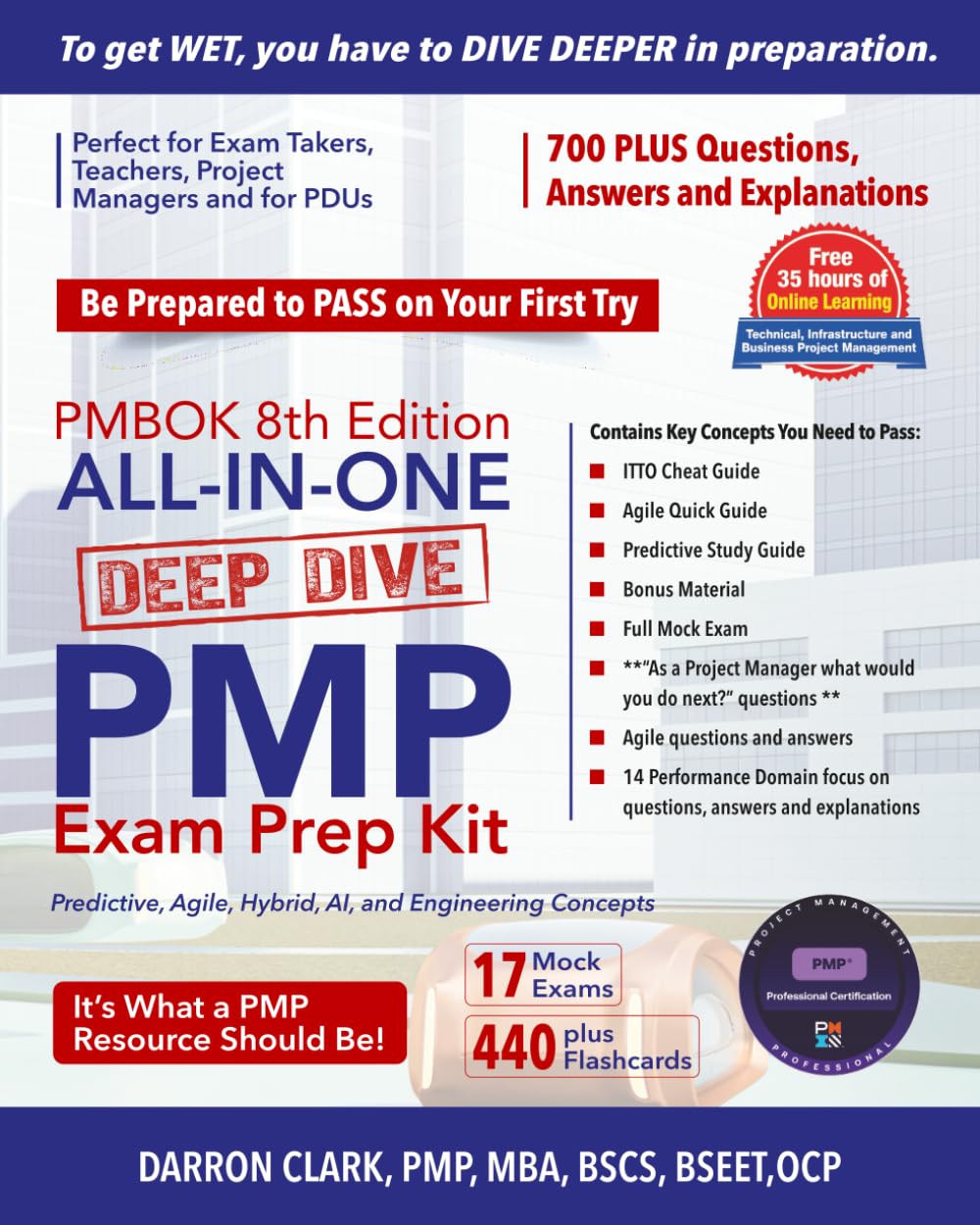
It feels like learning a language you’re not sure you’ll ever speak outside the exam. But here’s the thing. A good guide, especially the All-In-One PMP® EXAM PREP Kit by Darron Clark, isn’t meant to be memorized line by line. It’s meant to change how you think about work, decisions, and even people.
Because project management isn’t just about timelines and budgets. It’s about handling uncertainty without losing clarity. It’s about communicating when things get messy. And yes, it’s about staying steady when everything feels slightly off. So, if you’re ready to snag that certificate, here’s a complete guide to PMP certification.
What a PMP Guide Really Teaches You
At first glance, a PMP guide looks technical. Processes, knowledge areas, frameworks. But underneath all that structure is something more human.
You’re learning how to deal with ambiguity. How to make decisions when not everything is clear. How to communicate when people don’t agree. That’s where emotional awareness quietly sneaks in.
Think about it. Risk management isn’t just numbers. It’s anticipating stress points. Stakeholder management isn’t just mapping influence. It’s reading people. A solid PMP guide helps you see those layers instead of just memorizing terms.
Breaking Down the Core Structure
The Process Groups
Every PMP guide revolves around five process groups: initiating, planning, executing, monitoring, and closing. Sounds simple, right? Spoiler: It’s not.
Planning alone can feel like an entire universe. But here’s a small shift that helps. Don’t treat these as rigid steps. Treat them as conversations. Each phase is basically asking a different question.
- Initiating asks, “Should we even do this?”
- Planning asks, “How will we survive doing this?”
- Executing asks, “Are we actually doing it?”
- Monitoring asks, “Are we still on track?”
- Closing asks, “What did we learn?”
Once you see it this way, the structure becomes less mechanical and more intuitive.
Knowledge Areas That Actually Matter
A PMP guide lists ten knowledge areas, but not all of them hit you equally at first. Integration management is where everything connects. Miss this, and your project feels scattered.
Communication management often gets underestimated. It shouldn’t. Most project failures come from miscommunication, not lack of technical skill.
Risk management teaches you to think ahead, which, oddly enough, builds a kind of emotional resilience. You stop reacting and start anticipating.
Why This Isn’t Just About Passing an Exam
Let’s be honest. Many people pick up a PMP guide with one goal: pass the exam and move on. That works, technically. But it leaves a lot on the table.
When you actually engage with the material, something shifts. You start noticing patterns in your daily life. You handle conflicts differently. You become more aware of how decisions ripple outward.
That’s where this connects to emotional awareness. Project management, at its core, is about navigating people and uncertainty. Those are emotional spaces, whether we admit it or not.
How the All-In-One PMP® Exam Prep Kit Stands Out
The All-In-One PMP® EXAM PREP Kit by Darron Clark does something many guides don’t. It feels approachable without dumbing things down. There’s a rhythm to it. Concepts build naturally instead of being dumped on the page. You get explanations, then reinforcement, then practical angles.
What’s more, this PMP Certification guidebook includes 1300 questions and answers, 240+ flashcards, templates, and pamphlets to help you ace the exam. It also respects your time. Not every reader wants a textbook experience. Sometimes you need clarity fast, especially when juggling work and study. That balance is what makes this particular PMP Guide effective.
A Smarter Way to Study
Reading alone won’t cut it. A PMP guide works best when you interact with it. Try this. After each section, pause and ask yourself how it shows up in real life. Have you seen a project fail due to poor communication? Have you experienced unclear scope?
That reflection builds retention far better than highlighting paragraphs. Another trick. Teach what you learn, even if it’s just explaining a concept out loud to yourself. It sounds odd, but it forces clarity.
The Emotional Side of Project Management
Here’s the part people don’t talk about enough. A PMP guide quietly trains you to stay steady under pressure. Deadlines slip. Stakeholders push back. Plans change.
If you rely only on technical knowledge, you’ll feel overwhelmed. But when you develop awareness, you start responding instead of reacting. You notice tension in meetings. You adjust your communication. You anticipate concerns before they escalate.
That’s not in the formulas. It’s in how you interpret them.
Closing Thoughts
A PMP guide is often treated like a checklist. Study, memorize, pass, done. But it’s more useful than that if you let it be. It teaches structure, yes. But it also shapes how you think, how you handle uncertainty, and how you work with people who don’t always see things your way.
If you approach it with curiosity instead of pressure, the experience changes. You don’t just prepare for an exam. You build a skill set that sticks with you long after the certification. And that’s where the real value is.
#AmazonAds #PMPInstructor #TechGPMTrain #DigitalMarketing #AdOptimization #BookMarketing #PMPExamPrep #AuthorLife #CampaignManagement #MarketingStrategy


