
How PMP Certification Works: A Complete Guide
If you’ve been circling the idea of getting your PMP certification, you’re probably juggling a mix of curiosity and hesitation. It’s one of those credentials that seems both powerful and slightly intimidating at the same time. And honestly, that’s fair. It’s not a casual weekend course.
But once you understand how it actually works, the whole process starts to feel a lot more manageable. Let’s break it down in a way that makes sense, without overcomplicating things.
What is PMP Certification?
The PMP certification is offered by the Project Management Institute (PMI). It’s widely considered the gold standard for project managers, not because it’s flashy, but because it proves you can handle real-world project complexity.
This isn’t just about memorizing terms. It’s about understanding how projects behave when things go wrong, when teams clash, or when timelines slip. And trust me, they always do at some point.
Who Should Actually Go for the PMP Certification?
Not everyone needs a PMP certification, and that’s worth saying upfront. You’re a strong candidate if:
- You already manage projects or teams
- You want to move into leadership roles
- You’re tired of learning project management informally and want structure
If you’re fresh out of university, this might feel overwhelming. But if you’ve been in the field for a few years, the certification starts to feel less like a challenge and more like a natural next step.
How to Ensure You’re Eligible for PMP Certification
Before you even sit for the exam, PMI wants proof that you’ve been in the trenches. You’ll need:
- A certain number of hours leading projects
- Formal project management education
It sounds strict, but it’s actually reassuring. It keeps the PMP Certification from becoming just another checkbox credential.
What Does the PMP Exam Test?
Here’s where many people get it slightly wrong: the PMP exam isn’t just about theory. It’s designed around three core areas:
- People (team leadership, conflict resolution)
- Process (planning, execution, delivery)
- Business environment (how projects connect to bigger goals)
So, when you prepare for the PMP certification, you’re not just studying definitions. You’re learning how to think like a project manager under pressure. And that shift in thinking is what trips people up.
Study Materials to Pass the PMP Exam
There’s no shortage of prep resources out there. Some are solid. Some feel like they were written by someone who hasn’t managed a project in years.
One resource that stands out is the All-In-One PMP® EXAM PREP Kit by Darron Clark. In addition to this exam book, Clark also offers 35+ hours of targeted PMP training online. What makes this kit stand out is how it blends clarity with practicality. It doesn’t just throw information at you. It walks you through how concepts show up in real situations.
For someone preparing for the PMP certification, that matters more than you might think. Because when you’re in the exam, questions often feel like mini case studies, not textbook prompts.
How Long Does Preparation Take?
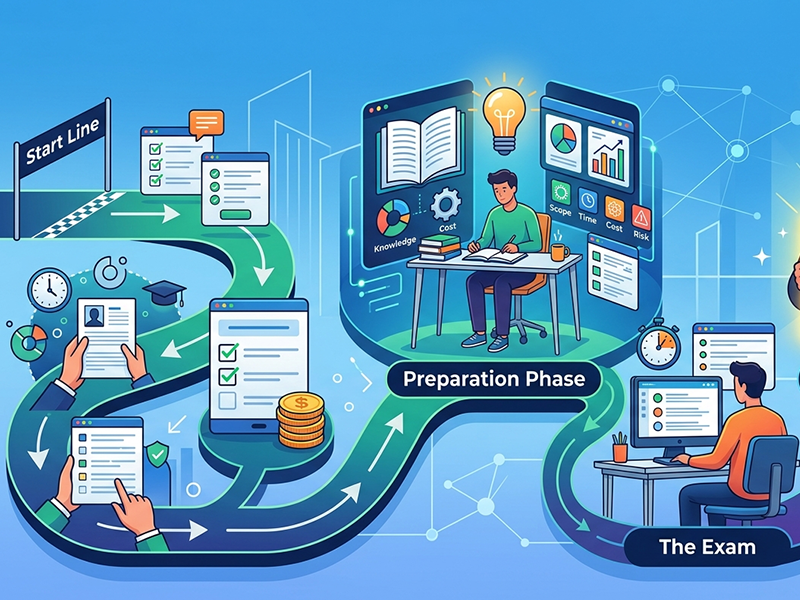
This depends on your background, but most people take anywhere from 2 to 4 months. Here’s a rough rhythm that works:
- First few weeks: understanding concepts
- Middle phase: practicing questions and identifying weak spots
- Final stretch: full mock exams and review
Trying to rush your PMP certification prep usually backfires. There’s just too much nuance in how questions are framed.
What Is the Exam Experience
The exam itself is computer-based and scenario-heavy. Expect questions that make you pause and think, not just recall facts. You might read a situation and think, “Well, it depends.” And that’s exactly the point.
The PMP certification tests your judgment, not just your memory. It can feel mentally exhausting. Plan for that. Take breaks during prep, so your brain builds stamina.
Common Mistakes to Avoid when Preparing for the PMP Exam
A few patterns show up again and again:
- Focusing too much on memorization
- Ignoring practice exams
- Underestimating situational questions
The biggest mistake? Treating the PMP certification like a typical academic exam. It’s not. It’s closer to decision-making training.
What You Gain Beyond the Credential
Let’s be honest. The certificate itself opens doors. Better roles, higher salaries, more credibility. But something else happens along the way.
You start seeing projects differently. You notice risks earlier. You communicate more clearly. You stop reacting and start anticipating. That’s the real value of the PMP certification. The mindset shift.
Is the PMP certification Worth It?
Short answer? Yes, if you’re serious about project management. Longer answer? It depends on how you approach it.
If you treat the PMP certification as just another exam to pass, you’ll get the credential but miss the transformation. If you engage with the material, question it and apply it, then it becomes something much bigger.
The Final Words
Preparing for the PMP certification isn’t always smooth. Some days, the material clicks. Other days, it feels like you’re reading the same concept for the third time and still not getting it. That’s normal. What matters is consistency. A bit of patience. And choosing resources that actually teach, not just inform.
Once you’re through it, you don’t just walk away with a certificate. You walk away thinking like someone who can lead projects with confidence. And that’s a skill that sticks.


